How Warm Should the Pool Be for Swim Lessons?
If you are planning lessons at a home, community or apartment pool, the right pool temperature for swim lessons matters more than most families expect. A child who is shivering by minute ten stops listening, stops kicking and starts asking to get out, and a lesson that might have been a breakthrough turns into a tug of war over a towel.
This guide pulls together what the American Academy of Pediatrics (AAP), the American Red Cross and competitive swimming bodies actually publish about water temperature, then turns it into a plain checklist you can use before every lesson: what to aim for by age, what to do when the water is cooler than ideal, and the signs that mean it is time to get out.
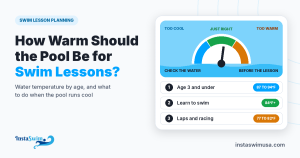
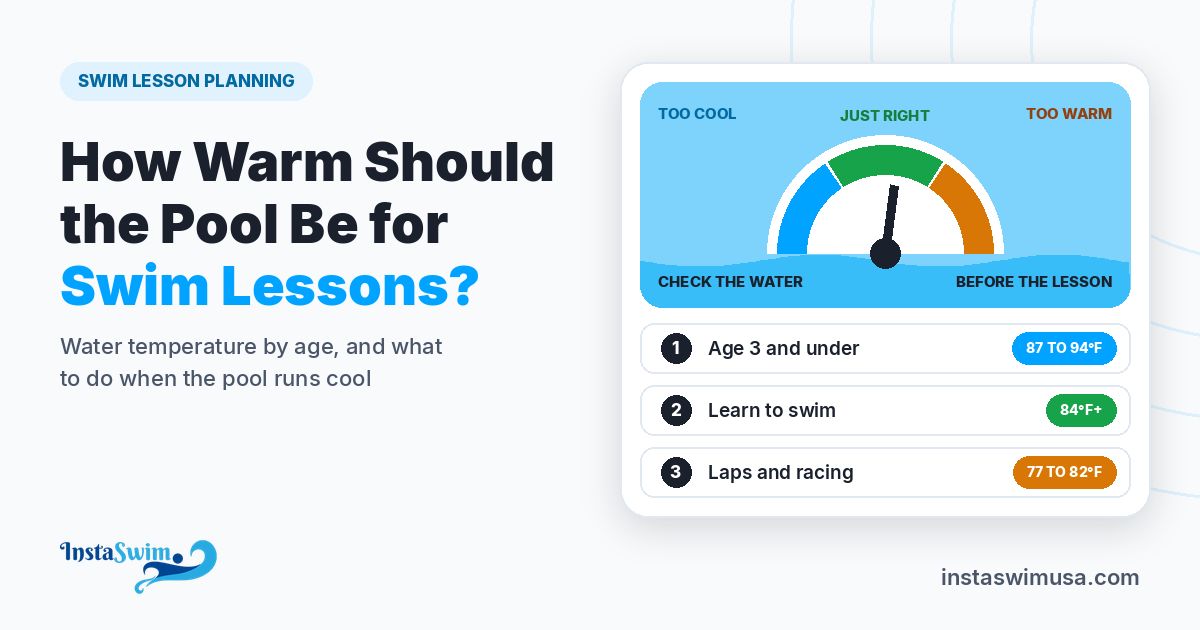
For children 3 and under, the AAP suggests lesson water of 87 to 94°F. Red Cross guidance for school age learn to swim classes is about 84°F or warmer. Lap and competition pools run cooler, about 77 to 82°F, which suits hard training more than beginners.
Cooler water can still work for older kids if lessons are shorter and active, but shivering, blue lips or a glassy stare mean the lesson ends now.
Pool temperature for swim lessons by age
There is no single legal number for lesson water. The Red Cross advisory on water temperature says plainly that there are no standards, only guidelines, and that its figures assume a controlled indoor pool. Still, the published guidance lines up well, and the pattern is simple: the younger and less active the swimmer, the warmer the water should be.
| Who is in the water | Suggested water | Typical time in water | Source |
|---|---|---|---|
| Babies and children age 3 and younger | 87 to 94°F | Short classes | AAP |
| Infant and preschool classes | 89.6°F (32°C) or warmer | 20 to 30 minutes | Red Cross |
| School age learn to swim | 84.2°F (29°C) or warmer | 30 to 45 minutes | Red Cross |
| Teens and adults, low intensity skill work | 84 to 90°F (29 to 32°C) | 60 minutes or more | Red Cross |
| Teens and adults, intense activity | 79 to 82°F (26 to 28°C) | 60 minutes or more | Red Cross |
| Swimming competition | 77 to 82°F (25 to 28°C) | Racing and warm up | World Aquatics |
A few notes on reading that table. The Red Cross rows for teens and adults come from its lifeguard and instructor courses, because the advisory does not set a separate number for adult beginners. A nervous adult learning to float moves slowly, so the low intensity row is the closer match. The AAP and Red Cross figures for little ones overlap: both point to water in the high 80s to low 90s. And the competition row is there mainly as a warning, because many lap pools and school pools are kept near that range for fitness swimmers.
Lesson length and temperature work together. The Red Cross pairs its warmest guideline with the shortest classes, which is one reason short classes suit toddlers. Our guide on how long a swim lesson should be covers the age by age reasoning in more detail.
Why beginners need warmer water
A swim team athlete doing hard sets makes a lot of body heat, which is why racing pools are kept cool. A beginner does the opposite. Much of a first lesson is spent standing on a step, holding the wall, floating with support or waiting for a turn, so the body is losing heat to the water without much movement to replace it.
- Small bodies cool faster. The AAP notes that hypothermia is a greater risk for children 3 and younger, which is why its suggested range is the warmest of any group.
- Comfort affects balance and learning. The Red Cross advisory says younger children and older adults need warmer water for thermal comfort and balance. A tense, chilled child is harder to float and slower to trust the instructor.
- Skill work is slow work. Back floats, blowing bubbles and practicing a safe exit all involve stillness. The Red Cross guidance draws the same line, with warmer water for low intensity work and cooler water only for intense activity.
- Cold water cuts lessons short. The Red Cross notes that water that is too cold can lead to chilling and discomfort. In practice, that means fewer useful minutes in a lesson you are paying for.
Warmer is better for
- Babies, toddlers and preschoolers
- First lessons and nervous swimmers
- Floating, bubbles and other slow skills
- Older adults and very lean kids
Cooler is fine for
- Confident swimmers doing laps
- Swim team practice and hard sets
- Short, active stroke drills
- Teens and adults who keep moving
How to check your pool before a lesson
InstaSwim lessons happen at the family's home pool or a pool the family has access to, such as a community, HOA, apartment or gym pool. That means the family, not the instructor, usually knows the pool best and controls the heat. A few minutes of checking the day before saves a lot of shivering.
Measure the water, not the air
A floating pool thermometer costs little and tells you more than a sunny forecast. Check at about the time of day the lesson will happen, since outdoor pools can change through the day.
Ask the pool manager
For a community, HOA, apartment or gym pool, ask what temperature the pool is kept at and whether there is a warmer teaching pool or a quieter time of day.
Plan heater time
If your home pool is heated, turn the heater on early enough to reach your target before the instructor arrives. Heaters can take a while to raise the water, so plan ahead and check again before the lesson.
Tell your instructor the number
Share the water temperature when you schedule. Instructors are independent contractors who plan their own lessons, and knowing the water helps them decide on length and activities.
Have warm layers ready
A hooded towel or robe at the pool edge, and a warm drink after, makes the end of a lesson calmer. Our first swim lesson guide has a full packing list.
When the water is cooler than ideal
Plenty of families live with a pool that sits below 84°F for part of the year. That does not always mean canceling, especially for older kids and adults, but it does mean changing the plan. The Red Cross advisory offers three practical levers for cooler water: add clothing, add a head covering, or limit time in the water.
- Shorten the lesson. A focused 20 minutes in cool water beats 45 minutes of shivering. Ask your instructor whether a shorter lesson fits the plan.
- Keep the lesson moving. Kicking games, walking or swimming to the wall and active drills make heat. Save long floats for warmer days, or keep them brief.
- Add a layer. A thermal swim top, a rash guard or a swim cap can help a lean child stay comfortable. Clothing is not a flotation device, so supervision stays exactly as close as before.
- Warm up out of the water. Walk to the pool in a robe and keep towels in the sun or somewhere dry. Get in only when the instructor is ready to start.
- Pick the warmest window. Outdoor pool water can change through the day. Check with a thermometer at a few different times and book the lesson for the warmest one.
- Move indoors for winter. Many adults keep learning through fall and winter at heated indoor pools. If your home pool is too cold for months, an indoor pool the family can access may keep progress going.
For babies and toddlers: the cool water tricks above are aimed at older kids and adults. For children 3 and younger, the AAP points to water of 87 to 94°F because hypothermia is a greater risk at that age. If the pool cannot get close to that range, it is reasonable to wait for warmer water or a warmer pool instead of pushing through.
If you are weighing whether a heated or indoor pool is worth the extra effort, remember that lesson pricing on InstaSwim is per lesson, not per student, so siblings can share a longer lesson on the day the water is warm. Our swim lesson cost guide shows typical prices by format.
Can the pool be too warm?
Yes, though it is less common than too cold. The Red Cross advisory notes that water that is too hot can lead to overheating and discomfort, and that some state pool codes set a maximum of 90°F for heated pools. The guidance for active teens and adults tops out at 82°F, and a 2017 USA Swimming article put it more bluntly: for hard training, anything above about 82°F can mean dehydration and overheating.
For lessons, that mostly matters in two cases. First, older kids and teens working hard on strokes may tire faster in very warm water, so water breaks and shade help. Second, a hot tub or spa is not a lesson pool at all. Spa water is much hotter than any lesson guideline, and young children have their own limits there, covered in our guide to hot tub safety for kids.
Signs it is time to get out
A number on a thermometer is a starting point. The swimmer in front of you is the real gauge. The Red Cross advisory says an activity should be stopped right away for a student who shows signs of getting too cold, and the CDC notes that hypothermia can happen even in cool conditions when a person is chilled by cold water.
Too cold: get out and warm up
- Shivering that does not stop
- Numbness, clumsy or fumbling hands
- A glassy stare, confusion or weakness
- Very low energy or drowsiness
- In babies: bright red, cold skin
Too warm: take a break
- Headache, nausea or dizziness
- Flushed skin
- Pale, ashen, cool or moist skin
When a child is chilled, the CDC advice for warming someone up is simple: get them into a warm room or shelter and remove wet clothing. Wrap them in dry towels and layers. The CDC says a body temperature below 95°F needs medical attention right away, and any child who seems confused, very sleepy or unusually weak after swimming should be seen by a doctor.
One layer of protection. Warm water makes lessons more productive, but lessons are only one layer of protection. Close, constant adult supervision, barriers around home pools and life jackets in open water all still matter. For the bigger picture, see our drowning statistics report.
Frequently asked questions
What is the best pool temperature for swim lessons?
It depends on age. The AAP suggests 87 to 94°F for children age 3 and younger. Red Cross guidance for school age learn to swim classes is about 84°F or warmer, and for slow skill work with teens and adults about 84 to 90°F. Cooler water suits active, confident swimmers.
Is 80 degrees too cold for swim lessons?
For toddlers and babies, 80°F is well below the AAP range of 87 to 94°F. For school age kids it is below the Red Cross guideline of about 84°F, so plan a shorter, active lesson and watch for shivering. Confident older swimmers and adults doing active work often manage it fine.
What temperature should the pool be for baby swim lessons?
The AAP suggests water of 87 to 94°F for swim and water safety classes for children age 3 and younger, because hypothermia is a greater risk at that age. Red Cross guidance for infant and preschool classes is 89.6°F (32°C) or warmer, with classes of about 20 to 30 minutes.
Can a pool be too warm for swim lessons?
Yes. The Red Cross notes that water that is too hot can lead to overheating, and some state codes cap heated pools at 90°F. Watch for headache, nausea, dizziness or flushed skin, and take a break in the shade. A hot tub is never a substitute for a lesson pool.
How do I keep my child warm during swim lessons?
Check the water before the lesson, keep the lesson short and active in cooler water, and consider a thermal swim top or swim cap. Wait in a robe until the instructor is ready, and have a hooded towel at the edge. End the lesson if shivering will not stop.
Should we cancel a swim lesson if the pool is cold?
For children 3 and younger in water well below 87°F, waiting for warmer water is reasonable. For older kids and adults, talk with your instructor first: a shorter, more active lesson often still works. If the water stays cold for months, a heated indoor pool you can access may be the better plan.
Warm water, ready to learn
Browse independent instructors near you, read their self described experience, and choose who fits your family and your pool.
Find Instructors Near YouSources
- American Academy of Pediatrics, HealthyChildren.org: Swim Lessons for Children: When to Start and What to Consider (updated 2026). Supports the 87 to 94°F range for children age 3 and younger and the higher hypothermia risk at that age.
- American Red Cross Scientific Advisory Council: Water Temperatures and Aquatic Courses advisory (2018). Supports the guidelines by age and activity, class times, the no standards note, comfort and balance, overheating, the 90°F state code maximum, cool water options and stop signs.
- World Aquatics: Swimming pool rules (in force from January 2024). Supports the 25 to 28°C competition water range.
- USA Swimming: Coach, Can You Make this Pool Warmer? (2017). Supports typical competitive pool ranges and the overheating note above about 82°F for hard training.
- Centers for Disease Control and Prevention: Preventing Hypothermia (reviewed 2026). Supports hypothermia from cold water, warning signs in adults and babies, warming steps and the 95°F body temperature threshold.
- Centers for Disease Control and Prevention: Recognizing Hypothermia (reviewed 2026). Supports the warning signs list and seeking medical attention.
About this guide
Compiled by the InstaSwim team in November 2026 from guidance published by the American Academy of Pediatrics, the American Red Cross, World Aquatics, USA Swimming and the CDC. Temperatures are guidelines, not standards, and most were written for controlled indoor pools; outdoor and home pools vary through the day and season, so use a thermometer and watch the swimmer. Fahrenheit figures are converted from Celsius where the source used Celsius. Instructors on the InstaSwim platform are independent contractors who describe their own methods and experience, and families decide, with a doctor where appropriate, whether a swimmer can safely take part. Lessons never make anyone drown proof. This guide is general information and is not medical advice.